Play Order (Release = Chronological)Recommended
0 / 9 playedThe order the games came out, and the recommended play order. Era groups keep the three phases of the series clear.
Classic era
- 1 Doom (1993)
- 2 Doom II: Hell on Earth The 2024 Doom + Doom II bundle is the version to buy.
- 3 Doom 64 Direct sequel to Doom II. The modern port is included in recent re-releases.
2000s era
- 4 Doom 3 Horror-leaning reboot. Play the BFG Edition on modern platforms.
- 5 Doom 3: Resurrection of Evil Expansion for Doom 3, included in the BFG Edition.
Modern era
- 6 Doom (2016) Series reboot and recommended entry point.
- 7 Doom Eternal
- 8 Doom Eternal: The Ancient Gods Two-part campaign DLC from 2020 to 2021. Play after the base game.
- 9 Doom: The Dark Ages Story prequel to the 2016 game. Play it last anyway, since it builds on Eternal.
About Doom
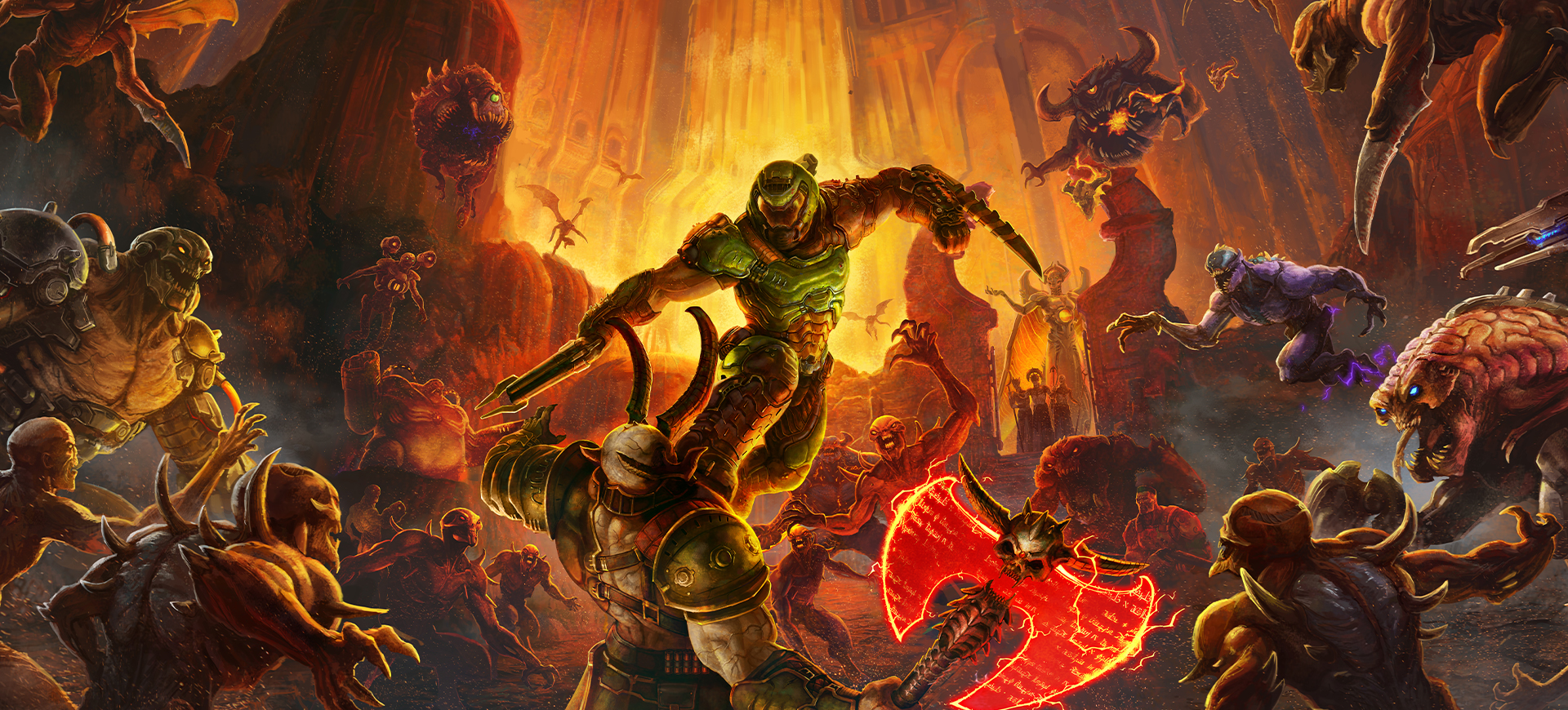
Doom is id Software's landmark shooter series about the Doom Slayer's war against Hell. Three eras define it: the fast pixel classics, the slower horror-leaning Doom 3, and the modern trilogy of Doom (2016), Eternal and The Dark Ages. New players should start with Doom (2016), which reboots the story and teaches the modern combat loop from zero.
Release order is the recommended play order, and this single list covers it. The Dark Ages is a story prequel to the 2016 game, set in a techno-medieval war, but it builds on Eternal's systems and hits harder when played last. Doom 64, once a Nintendo 64 oddity from 1997, was confirmed as a direct sequel to Doom II and fits naturally after it.
Good to know
The 2024 Doom + Doom II re-release bundles the first two games with extra episodes and is the simplest way to play them today. Doom 3's expansion Resurrection of Evil (2005) is listed separately, while the Lost Mission content from the BFG Edition is optional. No next game has been announced, so The Dark Ages (May 15, 2025) closes the list.